
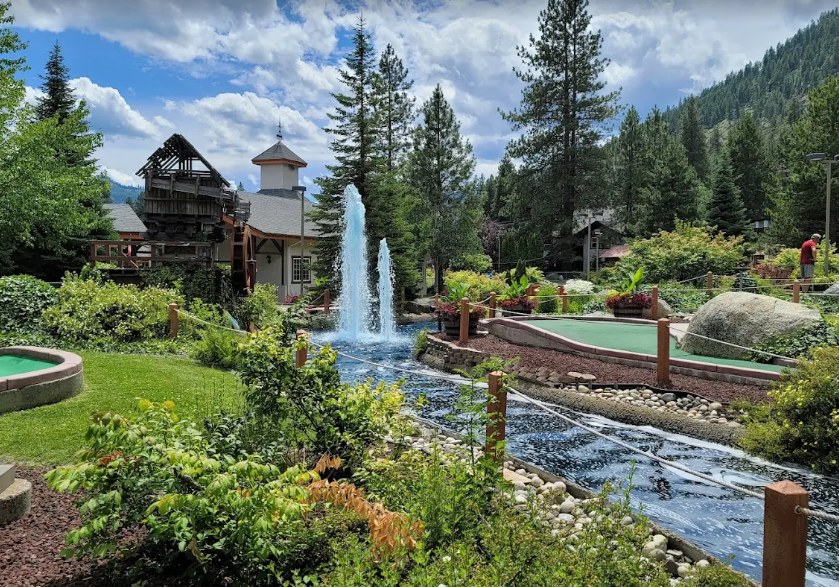
The global mini golf market is expanding rapidly. As of 2024, it was valued at approximately USD 1.43 billion, and projections estimate a CAGR between roughly 6–6.7% from 2025–2033 — potentially reaching nearly USD 2.48 billion by 2033. Dataintelo
At the same time, the broader “Family & Indoor Entertainment Centers” sector is booming. The global indoor entertainment/family-FEC market recently jumped from about USD 35.24 billion in 2024 to an estimated USD 39.97 billion in 2025, driven by evolving leisure preferences, urbanization, and demand for weather-independent entertainment. The Business Research Company
Concretely in the U.S., the combined market for golf driving ranges, mini golf, and family-fun centers was estimated at USD 24.3 billion in 2023, and has grown at a 4.0% CAGR between 2018 and 2023. IBISWorld
Bottom line: mini golf isn’t a niche throwback — it’s becoming a core pillar of modern, diversified family entertainment. If you’re building or investing in mini golf (especially as a modular, scalable concept like Castle Golf), the market conditions in 2025 are very favorable.
2025 Trends Shaping the Mini Golf / Family-Entertainment Industry
1. The Rise of Themed, Immersive & Indoor Courses
Traditional “putt-putt” courses are getting a serious upgrade. Modern mini golf venues increasingly favor themed, narrative-driven courses, combining immersive environments with creative hole design (think “adventure,” “fantasy,” or “haunted castle” themes). These build an experience — not just a game — and appeal to families, kids, teens, and adults alike. Greenspan
There’s also a shift toward indoor, climate-controlled mini golf — which works year round, regardless of weather, and is especially attractive in seasonal-weather regions (like many parts of the U.S.). Greenspan
For builders: this means demand for modular, creative, durable obstacles and design elements – something that dovetails directly with what Castle Golf could provide.
2. Mini Golf as Social & Leisure Lifestyle, Not Just Kids’ Play
In 2025, mini golf is increasingly popular among adults and young adults seeking casual, social entertainment with friends — not just families with kids. Venues are evolving into social hubs: some even offer drinks, food, nightlife vibes, and casual event-style settings. blooloop
This shift expands the audience far beyond traditional demographics — meaning more sessions, more repeat business, and higher revenue potential per location.
3. Modular, Portable & Multi-Purpose Builds (Great for Builders)
One trend gaining traction is portable or modular mini golf setups — easier to install, relocate, or repurpose. These lower upfront costs and add flexibility for pop-up events, seasonal usage, or transitioning venues. Accio
The diversification into indoor, outdoor, themed, and portable mini golf means builders must be ready for a variety of use cases — something your background with CAD, prototyping, and modular design gives you a strong advantage for.
4. Attractive Business Economics & ROI Potential
For operators, mini golf courses are emerging as a viable — sometimes surprisingly lucrative — business. According to a 2025 overview, many mini golf venues report profit margins from 20–70%, and annual earnings often between $30,000 and $150,000. Setup costs can often be recouped within 1–3 years. ROLLER Software
Lower entry costs (especially with portable/modular builds), combined with recurring demand from families, social groups, and casual players, make mini golf a strong candidate for stable cash flow.
What This Means for Castle Golf & Builders
Given these trends — growing market demand, diversified users, immersive design expectations, modular/portable formats, and encouraging economics — this is a great time for a company like Castle Golf to push forward.
Modular, Click-Together Mini Golf Pieces: Your modular mini-golf course concept fits perfectly with demand for flexible, portable, easy-to-deploy builds.
Themed & Immersive Packages: Offering themed obstacle sets (fantasy castle, adventure, glow-in-the-dark) could differentiate Castle Golf from basic mini golf offerings.
Family + Adult Entertainment Markets: You can target families and also capitalize on the growing adult/social mini-golf crowd — maximizing potential revenue streams.
Scalability & Licensing: Because of favorable ROI and flexible formats, modular sets + licensing (for builders / operators) could scale nationally or even internationally.
Looking Forward: Challenges & Strategic Considerations
Competition & Market Saturation: As mini golf becomes more popular, competition rises. Standing out requires strong branding, creativity, and high-quality builds.
Operational Costs & Maintenance: For permanent venues, upkeep, staffing, and running costs (especially indoor venues with utilities, F&B, etc.) become key.
Seasonality & Demographic Variance: Regions with harsh winters (like many in the U.S.) may struggle with outdoor-only models — making modular indoor or hybrid setups more attractive.
Digital & Hybrid Experience Integration: As leisure becomes more tech-savvy, expectation may rise for interactive features — digital scoring, booking apps, AR/VR integration, etc.
2025 isn’t just another year for mini golf — it could be a turning point. With a global market on the rise, shifting consumer preferences, and fresh demand for modular, immersive, social entertainment, mini golf is evolving into a mainstream entertainment asset.